Showing posts with label Reading Diary. Show all posts

Friday, November 20, 2015

Extra Reading Diary: Czech Folktales

I found a lot of similarities between the first half of this unit and some of the others.  I’m kinda mad at myself because I can’t remember the exact names of the folktales I’m thinking of.

I know that The Three Roses is similar to the original telling of the The Beauty and the Beast – a merchant seeks shelter during the night in a seemingly abandoned castle.  He then wanders into the garden and finds a rose bush and picks a rose for his youngest daughter. 

That’s when the beast comes out and tells him that since he picked the rose, the merchant was going to die.  The merchant successfully begged for his life and the beast told him that whoever greeted him first upon the merchant’s return home had to be brought back to the castle to live with the beast.

Granted, the merchant’s daughter never had to cut the beast’s head off.  Twice.

Also, the last line of this story is just pure awesome.  I like it because it invokes a sense that the narrator isn’t of this realm.  It makes this all seem like something that has happened on different plane of existence – say in a world where magic exists and it’s totally plausible to cut someone’s head off twice, after nursing them for three hours for three days, before they turn into a prince you get married to.

And now I wonder what this narrator sees in our world and if he wants to go back?  Maybe he's playing some hockey:

Tomáš Hertl

Monday, November 16, 2015

Reading Diary B: Kalevala

I enjoyed hearing about Joukahainen attempting to get revenge on Väinämöinen.  A quick google search has lead me to the discovery of the Finnhorse - the only native horsebreed to Finland.  With the description of Väinämöinen's horse as "straw colored" - I came up with this guy:

Finnhorse stallion, Ukkosen Poika

Okay, switching gears. This is going to act as my primer-slash-author's note for this week's storytelling.  So, let me tell y'all about a sweet little Finnish boy named Olli Määttä.

Olli

Normally it takes a lot to stir any sort of maternal instinct in me, but sometimes I look at this 6'2" blond puppy and I just want to wrap him in a blanket and make him some hot chocolate.  Even as he's bowling people over... (Olli's #3, the guy with the puck)


At just 19 years old during 2013-14 season, Olli immediately broke into the NHL (something more typical of forwards; it's harder for young defensemen to break in early just because the game is so much faster than at the lower levels - so you need a much higher hockey IQ/more sophisticated hockey sense).  

During the 2014 Winter Olympic break, Olli got a bronze medal playing with the likes of Teemu Selänne, a.k.a. The Finnish Flash - who was participating in his last Olympics. Selänne's career had lasted from 1989-2014 (longer than Olli's even been alive) and he still holds a number of records.  The greatest part of the whole thing?  Selanne gushing about Olli <3

Olli and Teemu

The 2014-15 season - Olli is now 20 - was less kind.  In October, a preseason medical checkup found a cancerous tumor in his thyroid.  So remember that picture from Reading Diary A?

My son.

That scar at the base of his throat is from the surgery to remove the cancer.  He goes on to talk about how the hardest part of having cancer isn't having cancer - it was having to tell his parents, his siblings, and his teammates.
Later in the year, he once again went under the knife.  This time for a shoulder injury that took Olli out for the rest of the season.  Oh, and then he got mumps during a League wide outbreak.

You Can't Make This Up.

But, Olli has persevered.  He's made it back and the 21-year-old is continuing to play at a high level.

Possibly, through magic...

Sunday, November 15, 2015

Reading Diary A: Kalevala

I love the singing bards-slash-wizards of Finland.

I've gone through a few of the Kalevala stories in my own time so this is a nice refresher course for me.  I'm pretty sure I've read the first story of this unit before - that familiarity helped me to get through the flowery language (the audio helped, too).

I think I like it so much because of the sound of the Finnish language is just so beautiful - I wish I was able to learn it.  But my mind can't quite work around languages, haha.

The power of words - that if you put enough faith and strength in them, you can make them become real - is fascinating to me.  I wish that it was something that more people believed.

Because there are words that I have said, words that have been said to me, that still cut deep.  Words that kinda sneak up on you when you're not paying much attention and you just cringe and try to shake them out of your head.

Another thing I love is the repeated "so-and-so did this once, then twice, and then again a third time."  I know I've used this formula in my own writing, and I must have picked it up from reading these stories.  I love the way it just flows!

When I write, I always try to pay attention to the cadence of the words in a sentence.  It's probably why I overuse dashs in my sentences - much to the chagrin of a lot of my professors.

For this week's storytelling, I'm probably going to be using one of my favorite Finnish hockey players: Olli Maatta.  (More about that scar at his neck in the next post - which may just serve as a Olli primer so I don't have to do an extended author's note...)

Olli Maatta

Thursday, November 12, 2015

Extra Reading Diary: Eskimo Folk Tales

This is my extra reading diary.  It’s from the Eskimo Folk Tales unit.

A high-content wolfdog.


I loved this story for a couple of reasons.

The first reason – the giant dog reminds me of White Fang, the titular character in the book by Jack London.  While White Fang was the biggest dog (well, wolfdog hybrid), he was definitely the fiercest.  Part of this was due to his time in a dog fighting ring when he was owned by a man named Beauty Smith. 

The scene where Giant Dog kills three dogs reminds me of the scene in White Fang where, after being rescued from Beauty by Weedon Scott and White Fang’s hanging out with Weedon back down in Cali, White Fang is set upon by a pack of town dogs.  White Fang knew that Weedon didn’t want him fighting other dogs, so he just tried to outrun them; the town dogs would nip and bite at him as he followed Weedon’s carriage.

Well, one day, Weedon stops the carriage after hearing some guys at the saloon encouraging the dogs to attack White Fang.  Weedon climbs out of the carriage and tells White Fang to “eat ‘em up.”   

White Fang doesn’t have to be told twice.

He kills two dogs in quick succession (silently, without growling or snarling) and chases a third one into a field and kills it there.

The second reason I love this story is the last line: “And that is all I know about the Giant Dog.”  My last folklore class we talked about how Native American stories were just being voice recorded over at Sam Noble – when someone noticed that they were missing out on a speaker’s hand gestures. 

The hand gestures were a version of Plains sign language – which was used when different tribes that didn’t share a language encountered each other on, well, the Plains.  So now, both audio and visual taping is used when Natives come in to share stories.

I watched and listened a lot of the stories ended like this – with “this is all I know” or “and that is the end.”

Wednesday, November 11, 2015

Reading Diary B: Celtic Fairy Tales

I really enjoyed Brewery of Eggshells because changelings are something that has always fascinated me.

Matter of fact – the show of the gods: Supernatural – did an episode about changelings titled The Kids Are Alright.  However, there were no eggshells involved – instead they described the changeling as feeding off of the mother’s synovial fluids.

(Sidebar: synovial fluids are just joint fluids.)

In Supernatural, the changeling’s true form is reflected in a mirror – showing off their large, mouths filled with multiple circular rows and of teeth.  Their faces also appear stretched and their eyes seem to disappear completely.

They are created by a mother changeling, who replaces the human children with her own so that her children can feed off the human mothers.
 
Changeling

But, in folklore the changelings are children of fairies, trolls, elves, or – as seen in the story – goblins who are left with human parents.  Not totally unlike cuckoo birds – who lay eggs in the nests of other birds (and those birds actually raise the cuckoo chick which is just crazy).

While the woman was able to determine if the children were changelings by boiling some potage inside an egg, Supernatural has Sam and Dean, the two main characters who are brothers, set the changeling mother on fire.  Because, as the old internet adage goes – fire is the best way to unwant something.
 
Demotivational Posters, ftw.

After the woman in the tale threw the children into the river (and Sam and Dean kill the changeling mother – thus killing the changeling children) the human children returned to their mother.


Monday, November 9, 2015

Reading Dairy A: Celtic Fairy Tales

I’m enjoying the first half of the Celtic fairy tales unit, but that last story, Gold-Tree and Silver-Tree, is an absolute delight!  But two of the big reasons: the second wife and the ending.

I love the there wasn’t any jealousy between the Gold-Tree and the second wife (who I’m just going to refer to her here on out as SW).  I feel like in a lot of other stories, there would have been a lot of fighting and maybe SW would have tried to trick Gold-Tree into leaving the Prince.  But the Irish are too chill to be playing games like that.

And the Prince is, of course, just jumps on the chance to have two wives, bless his heart.  From the little bit here, though, it seems like he genuinely loves them both. 

I absolutely loved SW’s big moment – when Silver-Tree shows up to kill her daughter and SW steps in and tricks her into drinking the poison.

That’s just so beautiful to me.

The second thing I love a lot about this story is the way it ended: “I left them there.”  One of favorite books of all time, Hannibal by Thomas Harris, ends about exactly like that.


We’ll withdraw now, while they are dancing on the terrace—the wise Barney has already left town and we must follow his example.  For either of them to discover us would be fatal.

We can only learn so much and live.


In the novel, Clarice and Hannibal run away to Buenos Aires.  Barney, the orderly who took care of Hannibal during his time in a mental facility for the criminally insane, sees them only from afar before he quickly gets away.  Not that Hannibal was going to kill him, Barney had been polite and courteous to him, never making things harder than they had to be, but Barney hadn’t wanted to risk anything.

While I always enjoy the hard-won defeat of a villain, sometimes I find myself rooting for the villain.  And when they get the win, I think it’s pretty great.

After the new Hannibal show started airing on NBC a few years back, I remember reading this Tumblr post.  It’s still pretty relevant and makes me chuckle every time I think about it!

Bless fandom.


Thursday, November 5, 2015

Extra Reading Diary: Robin Hood

I'm not quite sure I missed the fact that there's a Robin Hood unit, so I decided to do it for my extra reading diary.  Also, do you know our lord and savior Mel Brooks?  He's the one who brought us all this gem from "Robin Hood: Men in Tights."


Robin Hood and Little John

L. Rhead's tale of how Robin Hood and Little John meet matches up with Mel Brooks's version. Robin is walking along with some friends when he a big guy blocking the way across a bridge, that guy doesn't let him pass - they fight with a pair of staffs, Robin wins, Little John joins him, and they become great friends.

Of course, Brooks's version is filled with more hilarity.


I feel like this story could alternately be titled "How Robin Met His New Boyfriend After A They Beat Each Other Up."


Robin Hood and the Ranger

Robin falls in love (not that kind of love, I know, but really this is too much fun) with another man he's fought with.  I'm sensing a dangerous pattern here.  Alternate title: "Robin Hood Attracted To Men Who Wanted To Kill Him."


Robin Hood's Delight

I loved the ending of this story - the six of them fight for several hours before they all go on a three day bender.  Which is exactly what I do after I've gotten into a fight.  Also, can we just talk about how easy Robin is for good fighters?  Bless his heart.

Will Scarlet is featured in Men In Tights as a knife-wielding BAMF from Georgia whose full name is Will Scarlet O'Hara.


Wednesday, November 4, 2015

Reading Diary B: King Arthur

The Adventure of Sir Percivale

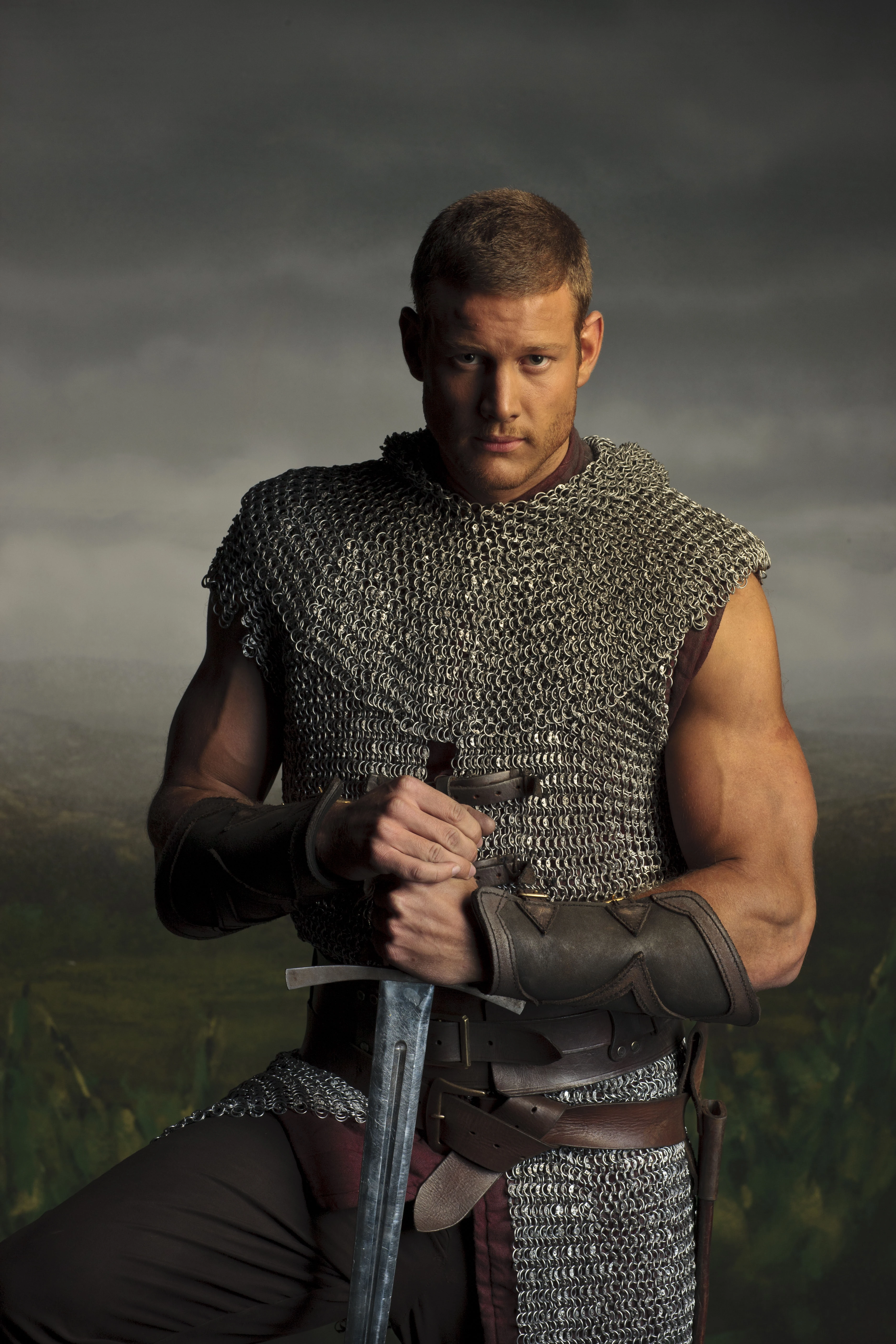
I love this story a lot, because I keep imagining Tom Hopper - who played Percival-no-e in Merlin  - going around doing this these things.  Which is especially fun when I got to the part where the knight on the black horse killed the hackney Percival had burrowed and Percival threw himself on the ground and then went to sleep.

Tom Hopper as Percival

So imagine the guy above, arms too big to fit into chain mail, throwing a tantrum and then taking a nap.

A lot of the times though, when I'm reading these stories and these characters are down on their luck, and someone from on high comes to help them out with a "Hey, I'll help you but I'm going to need a favor later" - it blows my mind that no one ever stops and wonders if this is a good idea.

Percival, you don't know who this lady is - why are just going to promise her you'll do something?  Yeah, she's got a great horse - BUT!

Oh, and the horse turned out to be a devil.  See, Percy, this is why you don't accept horses from strangers.

With the way the horse was going towards water to taken Percival to hell, I wonder if this facet of the tale was based on kelpies?  Kelpies are, traditionally, water spirits that take the form of horses.  They lure people onto their backs and then drown them. 

If anyone has been to the Fred Jones Art Museum and seen the scary horse statue with red eyes – I’m pretty sure it’s supposed to be a kelpie.  I heard that a while ago, so I may be wrong.  These below are definitely kelpies.  They’re located in Falkirk, Scotland and are almost 100 feet tall.

The Kelpies


Tuesday, November 3, 2015

Reading Diary A: King Arthur

This unit is every bit as fun as I thought it would be!  So, first off, if you haven't seen BBC's Merlin, I very highly recommend it!  It's on Netflix.  This is the cast:

Gaius (Richard Wilson), Arthur (Bradley James), Merlin (Colin Morgan), Uther (Anthony Head),
Morgana (Katie McGrath), and "Gwen" Guinevere (Angel Coulby)
You may recognize McGrath from Jurassic World, and Wilson, Morgan, and Head from Doctor Who.

These are the Knights of the Round Table:

Leon (Rupert Young), Percival (Tom Hopper), Merlin, Arthur, Lacelot (Santiago Cabrera), Elyan (Tomiwa Edun), and Gwaine (Eoin Macken)
You may recognize Hopper from Doctor Who and Black Sails and Macken from The Night Shift (I haven't watch it, but I've heard good things).

The show deviates from the myths, like, a lot.  I'll just compare the two different takes (Ford's adaption and the BBC's) on two different stories.


According to Ford, Arthur was delivered to a foster family by Merlin after the death of Uther, Arthur's father.  

Arthur is raised as Kay's squire and accompanies him to a tournament - Kay forgets his sword at home and sends Arthur to retrieve it.  However, the door's locked (because of course it is) and, not wanting his brother to be without a sword - Arthur goes to the church.  

At the church, an enchanted sword is stuck in a rock - really, it's stuck; no one can pull it out - and Arthur just sidles up and pulls it out, no big deal.

Except that it is a big deal and Arthur is then named the next King of England.  Like you do.

Now, in Merlin - the sword in the stone take is much different.  Earlier on in the series, Merlin takes Excalibur from the local blacksmith, has a dragon breathe some fire on it, and - in order to prevent the sword from falling into the wrong hands - sticks it in a rock until Arthur needs it (other stuff happens, BUT).

This clip is super cheesy and great, but here's what happens.


So the Ford tale, talks about Arthur and his knights chasing after a deer, except Arthur's horse is the only one fast enough to keep up with it - until it dies from exhaustion (which, really?).  

Anyway, then Arthur meets the beast - who simply passes him by.  He then encounters a boy and an old man, both of whom tell him something he didn't know about his past and both of whom are Merlin in disguise.

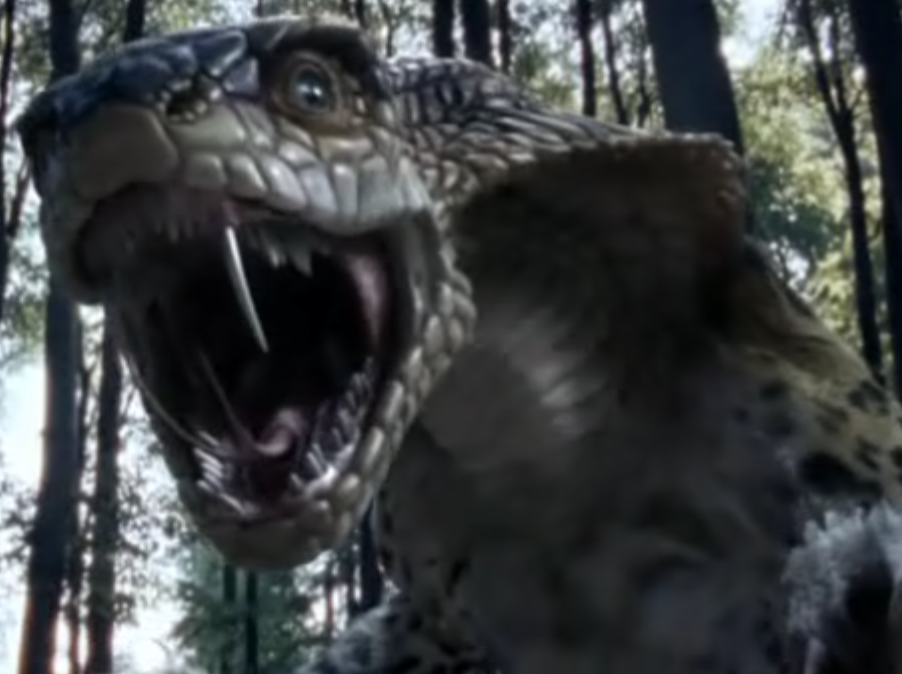
In Merlin, Arthur and his knights (and Merlin) are out hunting when they chance upon the questing beast.  Merlin actually trips and falls - and Arthur comes to his rescue, during which he's poisoned by the Questing Beast.  Merlin then goes on to do stuff and things and saves Arthur's life (because if he didn't, there'd be no series).

BBC's take on the Questing Beast

Tuesday, October 27, 2015

Reading Diary B: The Great Plains

Despite Supernatural being my all-time favorite television show in the history of ever – these ghost stories terrified me. In this show, they fight ghosts all the time. They use shot gun shells filled with rock salt in order to dispel spirits and fight them off with anything made of iron. In the Supernatural mythos, the easiest way to get rid of ghosts is to salt and burn the ghost’s bones.

The Ghost and the Traveler
This story reminded me of the Women in White stories – except this ghost was friendlier and simply seemed to want some company. Women in White tend to want to kill you…
 
Woman in White

The Man Who Shot a Ghost
I had to read this one a couple of times before I realized that the wolf digging into the grave was what caused the injury to the ghost.

The Indian Who Wrestled with a Ghost
I wonder if he was burning sage brush? It’s commonly believed that sage has a lot of healing and purifying powers. If you ever watch shows like A Haunting (an anthology tv show that tells the stories of, well, those that are being haunted), sage will be burned in order to purify the house and chase off angry spirits.

There’s another show called The Haunted, which focuses more around animals sensing spirits; it’s not as good as A Haunting, but it’s still something to watch especially around Halloween. They even have an episode called “Thump in the Night” which shows rabbits reacting to paranormal activity.

However, the show lost a lot of credibility (with me, at least) when they showed another case where the guy kept hearing these awful shrieks behind his house. Those shrieks were clearly the sounds of a fox and I feel like anyone who lives near the woods should know that.


Reading Diary A: Great Plains

I’ve heard the story about The Buffalo and the Grizzly (The Great Plains unit) before in a previous class, but it’s still one of my favorites. I’m already thinking about ways that I could possibly do this for my storytelling post. There are even two hockey teams I could use if I wanted to continue putting hockey twists to things: the Buffalo Sabres and the Boston Bruins.

One player I could feature for the Sabres would be Marcus Foligno, and for Boston it would be Matt Bartkowski. Bartkowski currently plays for the Vancouver Canucks, but he and Foligno fought each other last season when he was still on the Bruins.

I think they would work because this folktale kinda resembles what started the fight. Bartowski laid a hard and high hit on Gianta, making him go down to ice hard. In the story, the buffalo is just standing around, minding his own business, when the grizzly bear attacks him.

Unlike the story, Foligno immediately attacks back (technically, that would make him a second buffalo in the story – which isn’t canon – but just go with it), which the buffalo eventually does. Foligno goes on to win the fight (in my opinion, and according to the consensus of voters on the fight on hockeyfights.com) – much like how the buffalo wins the fight against the bear in the story.

Or, I can just treat the whole thing as a metaphor for Jack Eichel – one of the most highly touted American rookies from the 2015 NHL draft – being harassed by a Bruins player for the puck. The buffalo “winning the fight” would be Eichel scoring a game winning goal in overtime.

Jack Eichel (I saved this picture a long time ago from Twitter and now I
can't find the source but it's just too great to not use)

Thursday, October 22, 2015

Extra Reading Diary: Myths of the Cherokee

For my extra reading, I looked at the Myths of the Cherokee unit.  My two favorite stories are in the "The Deer and the Rabbit" chapter.

Jackalope

How The Deer Got His Horns

This story is great because it reminds me about the cryptid the jackalope.  Because what if Rabbit hadn't gotten caught cheating?  Then we'd have jacklopes!  My great-aunt, who lives in Topeka, KS, had a mounted jackalope hanging above her fireplace (typically, these mounts are stuffed jackrabbits with deer antlers).

In reality, the inspiration for jacklopes was more than likely found in wild rabbits suffering from infections of the Shope papilloma virus, which causes weird growths and tumors to grow from the rabbits face and body.  So be careful googling the images - they can get gross.

Fun fact: the study of the Shope papilloma virus helped to lead the development of the HPV vaccine.

Why The Deer's Teeth Are Blunt

I liked this story because, frankly, a deer with fangs isn't something that the world needs.  Sure, there's the water deer, who looks like a little saber-toothed deer (and certain biologists out there need to answer for not taking the opportunity to name it that), but that guy's a little cutie.  Now, imagine a white tail buck with big ol' wolf's teeth...

With all the stories of bucks going crazy during rutting season, adding fangs to the picture would just up the death toll of any unfortunate enough to get in their way.  So frankly I think we all owe Rabbit a bag of yellow apples and our never-ending gratitude.

Monday, October 19, 2015

Reading Diary B: California and the Old Southwest

This reading diary is over the second half of the California and Old Southwest unit and I want to talk about crows for a bit here.  In the tale “The Boy Who Became a God,” crows are seen returning to their flock to talk about the narrator’s brothers’ kill.  This is a thing that crows do in real life.

The Nature documentary did an episode titled “A Murder of Crows” which features the farming town of Chatham, Ontario – where a murder of approximately 300,000 crows had come to roost.  The problems with these crows got so bad, that the mayor held a shooting competition. 

However, it only took only one crow to get shot before the others realized how high they had to fly in order to avoid the pellets.  This information was spread throughout the murder by the crows talking to each other.  (While scientists still argue over whether or not crows have an actual language, it is agreed that crows do have distinct regional dialects.)

Since shooting didn’t work, the mayor of Chatham brought in a man who uses his trained hawk to harass and chase the crows.  The crows then go back to the roost and “talk” about what had just happened to them. 

So basically the crows in the tale “The Boy Who Became a God” exhibit actual crow behavior.

Here’s also a super fun cracked.com article called “6 Terrifying Ways Crows Are Smarter Than You Think” that helped me to procrastinate my way through this assignment.


Crows, among other corvids, are infamous tail-pullers

Reading Diary A: California and the Old Southwest

This reading diary is over the first half of the California and Old Southwest unit and there are three things that I want to talk about.


The Darkness

So my all-time favorite television show, Supernatural, has just started its 11th season and the big bad is called The Darkness. It was released when stuff and things happen (plot stuff that I won’t reveal in case someone is reading this who hasn’t seen the show and may eventually watch it) and is shown as a roiling black mass – much like how it was described in “The Creation of the World”: “…the darkness gathered until it became a great mass.”


The Darkness Returns

Supernatural has it as the Darkness existing before God and everything else, but when God decided to create the world, He locked away the Darkness so that it wouldn’t hurt His creations.

Coyote

I have a particular affinity for all trickster tales – especially Loki, even before the Thor and Avengers movies. Which could arguably retitled “Loki Did a Thing and Thor Was Banished” and “Loki Did a Thing and Now New York Is under Attack.” This could actually work for a lot of the Norse mythology – see the flow chart below.

Norse Crisis Flowchart

Loki and Coyote both disturb the status quo – often just for the sheer pleasure of it. Their independence and anti-authority antics makes identifying with them easy and allows people to embrace their inner rebels.

Great Floods

Just about every religion and culture has a great flood story and that fascinates me. Is it just that huge floods are typical around the world? What exactly constitutes a ‘great flood’ worthy of its own legend? Would the recent flooding in South Carolina be substantial enough? Perhaps it’s the flash flooding that can happen along mountain ranges – when spring storms are coupled with the melting snowcaps that sweep through, causing mudslides and washing away crops and homes and people.

People are just so fascinated by natural disasters that we have to some way to reason them out.

Friday, October 9, 2015

Extra Reading Diary: Nigerian Folk Stories

For this extra reading diary, I’m looking at the Nigerian unit’s “Why the Bat Flies by Night” because it was my favorite story.  Because Batman.

There’s a sort of parallel that can be drawn here between Bruce Wayne (Batman) as the bat of the story, and Jason Todd, as the bush rat.  For those not familiar with Jason Todd: he was the second Robin after Dick Grayson moves on to become Nightwing, relocating to Blüdhaven, a city close to Gotham.

“Why the Bat Flies by Night” describes how the bat, jealous of the bush rat, tricks him into boiling himself alive.  The bush rat was always complimenting bat’s super delicious stew and bat would always reply with: “I always boil myself in the water, and my flesh is so sweet that the soup is good.”  The bat even goes on to “demonstrate” just how he does this – it’s all a trick, just sleight of hand.

But the bush rat believes it.  And, when he gets home and tries it out himself – the bush rat dies after jumping into a pot of boiling water.  After the bush rat’s wife reports to the king, the king issues a warrant for the bat’s arrest.  To avoid being caught, the bat hides himself by day… and flies only by night.

Basically, this story breaks down into three parts: 1) the Bat realizing his jealousy, 2) acting on that jealousy, and 3) the consequences.  Remember these for later.

Switching back to Bruce Wayne and Jason Todd.* 

Bruce first meets a young Jason when Jason is trying to steal the rims off of the Batmobile.  Now, at this point in his career, Batman is not a young man anymore – he’s envious of Jason’s youth.  But that’s all he’s jealous of.  Among other things, Jason is angry.  His tragic past is constantly on his mind and it’s difficult for him to find any peace – often feeling a compulsory need to be training or to be out patrolling Gotham.

Much like how Bruce had been in his younger days.

So Bruce takes Jason’s anger and points it at a target: the criminals of Gotham.  And like how war dogs of old were simply pointed at the enemy when they were unleashed, Jason went where he was pointed.  But there were risks…

Jason Todd was brutally murdered by the Joker, Batman’s archnemesis (and one of the few supervillains who has remained consistently terrifying throughout each of his incarnations).

Now, calling back to the three parts of “Why the Bat Flies by Night.”

Number one: the bat realizing his jealousy.  Batman finds Jason and recognizes almost immediately the talent, the anger, and the youth that Jason has.

Number two: acting on that jealousy.  While Bruce can’t trick Jason into killing himself like what happened in the story, he instead adopts Jason.  He trains Jason and directs Jason’s anger away from any self-destructing tendencies and away from innocent people, and towards the criminal populace of Gotham City.

Number three: the consequences.  Jason Todd dies after being beaten bloody by the Joker with a tire iron.  But it doesn’t end there (because comic books) and he’s resurrected in a Lazarus Pit – effectively restoring him to life.  However, he doesn’t come back whole – he comes back worse.  He comes back and, after learning that Batman didn’t seek retribution against the Joker for his death, takes on the mantle of the Red Hood.

Jensen Ackles portrayed Jason Todd/Red Hood in the animated film "Under the Red Hood" [x]


*For the purposes of this piece, I’m only going to talk about post-Crisis Jason Todd.  I’m also grossly generalizing a lot of what happened in the comics.  To my fellow comic nerds who find their way here: I’m so sorry.  As it is, I’m way over word count.


Tuesday, October 6, 2015

Reading Diary B: Brer Rabbit

The second half of this unit was a bit more fun because it showcased a few instances where Brer Rabbit isn’t always at the top of his game.  In the story “Old Mr.Rabbit, He’s a Good Fisherman,” when he gets stuck in the well, is pretty funny.  It reminds me of the time that Ty got stuck in the clothes hamper.

Ty-ty got stuck. [personal photo]

A Story about the Little Rabbits” reminds me about the general chaos that usually surrounds young bunnies.  In the story, the young rabbits are scooped up by Mr. Fox who makes them perform various impossible tasks so that if they fail, he has an excuse to eat them (a previous story had shown Brer Rabbit killing and essentially torturing Mr. Wolf for trying to eat Brer Rabbit’s children).  Real life young rabbits, though, will get into this kind of trouble and the kind of tasks Mr. Fox has them preform aren’t that much different than the ones they do all on their own.

They’re constantly getting out of their play pens to chew on everything (breaking the stick up for Mr. Fox in the story), purposefully tipping over water and food bowls (collecting water for Mr. Fox), and if something is in their way they move it or tear it up (moving the wood for Mr. Fox).

Ty-ty attempting to decimate the cork population. The lesson: no matter how big the rabbit, if they want to get at something - they WILL.

Many savvy rabbit people will find these antics annoyingly endearing.  However, many people do not and young rabbits are quickly gotten rid of by their new owners – who may have purchased them on a whim or for their child for Easter. 

Khan and Sid were both approximately 4-5 months old when they were abandoned.  Ty-ty was only a little older - probably around 6 months old. Young buns can be separated from their mothers at 8 weeks and those bound for the pet trade are usually shipped off at this point.  So, between the ages of 8 weeks to 4/5/6 months, Khan, Sid, and Ty had gone through significant upheaval in their lives.

Sidney, the day we brought him home.  A friend had called us and said she spotted him by the railroad tracks - he was nothing but fluff, dirt, and bones.
Sidney, a month later, now clean and at a good weight.

Usually, and this is from my own observation with the rabbits I take in and the rabbits surrendered to Heartland, it seems like it only takes two or three months for owners to grow tired of a young rabbit's destructive behavior, the constant monitoring they require, and cleaning out a cage.  Rabbits also start entering sexual maturity around four months old, and males can get very aggressive and will even spray urine to mark their territory.  Females entering maturity can become very territorial and will guard their area aggressively.

This is why neutering and spaying rabbits is so important.  Once the surgery is over, it takes around 40 days for hormones to level out.  As a result of the surgery, rabbits will live much longer and happier lives.

This has been a PSA.


Monday, October 5, 2015

Reading Diary A: Brer Rabbit

One of the first books I owned was a Brer Rabbit book.  I vaguely remember the story about Brer Rabbit telling Brer Fox not to throw him into the briar patch, but I can't remember if it was a tar baby that Brer Rabbit had gotten stuck to or if it was something else.

I found reading the dialect of this unit difficult, so I listened to the audio books and it was much easier.  The stories are much more enjoyable when you can understand what is happening.

I think I love Brer Rabbit because I see a lot of that mischievousness and cunning in my own rabbits.  And I plan on shamelessly using this unit to show off more pictures of my rabbits.

When Ty-ty was still pretty young, he realized that he can jump over just about everything.  He had the run of the kitchen and the laundry room, which are attached, and we had to essentially blockade him inside the kitchen.  At one point we had wired together two baby gates so that they were stacked on top of each other and he still managed to jump over them.  We finally got a break when he started growing into his body and gaining his adult weight.

Khan on his harness for the first time just this past Saturday. [personal photo]

We let Khan out of his cage – a large dog crate with a bedding box and a cardboard “fort” he can sleep in – every day and he always makes it a point to climb to the highest points in the living room (so the back of the couch and a stool near the gate that separate the dining room and living room) and he “periscopes” – he stands on his hind legs and looks around.  

Stella periscoping - she's trying to judge whether or not jumping the gate will be worth the effort. [personal photo]

Monday, September 28, 2015

Reading Diary A: Japanese Mythology

For my first reading diary this week, I read the first half of the Japanese Mythology unit.  I loved reading about Amaterasu, especially because one of my favorite video games, Okami, is based partly around Amaterasu's interaction of the Eight-Forked snake (called Orochi in the game).

A lot of the game mirrors the legends around Amaterasu.

In the game, she is in the form of a wolf and carries a sun disk, a weapon, on her back.  The disk can also be changed out for a chain of beads (resembling the precious stones of the necklace Amaterasu is given by her father in the legends) or a sword.

The legends describe Amaterasu as sitting at a loom with her handmaidens and weaving people's fates; in the game - Amaterasu uses the Celestial Brush, in her wolf form this is her tail, which she uses to control the various natural forces around her (making the sun or moon rise, making flowers or trees bloom, controlling wind and fire and water, and even slowing time).

One of the main plots of the game is to defeat Orochi, the eight-headed demon whose arrow marks the house of the young girl who's to be sacrificed to him.  Amaterasu, with the help of a cast of characters, defeats Orochi by getting each of the eight heads drunk off of a specially brewed sake - just like in the legends.  Also just like the legends, on Orochi's back, is a large garden with a temple bell; each of Orochi's heads has control over an element: dark, earth, fire, light, lightning, poison, water, and wind.


Amaterasu vs. Orochi [x]

Thursday, September 24, 2015

Extra Reading Diary: Ancient Egypt

For this reading diary, I wanted to concentrate on the story about the two brothers.  I loved the story – it’s intricate and it seems like it was just one thing after another for poor Bata. I wish there was more detail about exactly what kind of markings a sacred bull had.  So I did some research.

The markings of an Apis bull – a bull who represented Ptah – had a black body with a white triangle on his forehead, a white vulture wing outline on his back, a scarab mark under his tongue, a white crescent moon on his right flank, and double the amount of hairs on his tail.

I thought that something with this high of a level of importance to Egyptians would mean that there would be more artwork featuring these types of markings.  But there are only two – one shows the white triangle and the other shows the vulture wing outline.


Adorning the Apis bull for the ceremony by Jean Baptiste Coene [x]
 
Procession of the Apis Bull by Frederick Bridgman [x]

Considering the amount of time people put into reviving nearly extinct horse breeds (the Przewalski’s horse, for example) or even all of the attempts to bring back the Woolly mammoth and Pyrenean ibex, I’m surprised someone hasn’t tried to re-create these markings so that they resemble one breed.  Then again, that would cheapen the significance of the markings – which served as a sign of Ptah’s presence.

Tuesday, September 22, 2015

Reading Diary A: Ancient Egypt

One of the fun things about this week’s reading section – Egyptian mythology – is that it is something that is so familiar.  I’m always fascinated to read how all the different takes there are on these same tales.

For example, one of my favorite television shows, Supernatural, showcased the god Osiris.  In the show, the god is portrayed by Faran Tahir.  After meeting Dean Winchester (Jensen Ackles) and sensing Dean’s guilt for recent events of the show, he kidnaps Dean to judge him.  If Dean’s conscious weighs more than feather – Osiris will kill him.

Osiris, God of the Dead [x]
However, at the last minute, Sam – Dean’s brother, portrayed by Jared Padalecki – shows up and demands a trial.  Osiris allows it on the condition that he gets to call three witnesses and the brothers can’t know who those witness are.  Sam, drawing on the few years of law school he had under his belt, acted as Dean’s defense attorney – even formally objecting to some Osiris’s actions (which Osiris promptly overrules).

In the show, Osiris is shown as having power of the spirits of the dead – able to control them and force them to do his bidding.  He finds those who are guilty of causing the death of another – either intentionally or unintentionally, the main focus is on if they feel guilty, kidnaps and brings them to “court”, and judges them.  If he finds them to be guilty, he kills them with the spirit of their victim.


With Dean, who feels guilty over a lot of things, his “trial” is quick and Osiris sentences him to death.  In the end, Sam finds a bit of lore that says that Osiris can be put into a centuries-long hibernation if he is stabbed with a ram’s horn.

Sam stabbing Osiris and saving his brother [x]